About the Author: Chris Smith

Why traffic may be falling in 2026
- Google’s May Core Update
- AI Overviews reducing clicks
- More SERP features
- Seasonal demand changes
- Technical issues
- Tracking problems
If your organic traffic has dropped recently, you are not imagining it. You are also probably not alone.
Right now, as of June 2026, Google’s May 2026 core update is still rolling out. Semrush’s Sensor is sitting at 7.5 out of 10, which it labels “High range.” SISTRIX’s volatility radar has shown a sharp spike in the US over the last few days, and its own scale defines anything above 6 as a likely major update. The UK radar peaked on 29 May. The market is genuinely noisy.
But here is the part that makes this harder than it looks: not every drop right now is happening for the same reason. Some sites are losing rankings. Some are holding rankings but losing clicks. Some have a tracking fault and do not even know it. A few are being quietly punished under spam policies they may not have been aware of.
Blaming “the algorithm” and leaving it there is the single most common mistake in SEO. This post is going to help you do better than that.
The Current Volatility Is Real, and It Is Measurable
Let’s be clear about what is actually happening at a market level before we talk about your site specifically.
Google confirmed the May 2026 core update began on 21 May and said it could take up to two weeks to complete. That means if your traffic dropped in late May or early June, there is a very real chance it is caught in live ranking turbulence rather than a targeted problem with your content.
Search Engine Roundtable’s coverage of the update includes forum reports of 50% drops, strong gains for some sites, and significant sector-specific disruption. That is exactly what broad core updates tend to look like from the outside.
It is also worth knowing that Google only discloses updates it considers “notable” on its Search Status Dashboard. That means you can feel very real volatility during periods that never get an official label at all.
The first diagnostic question should always be: was this a market-wide event, or just our site?
If Semrush, SISTRIX, and community chatter are all lighting up at the same time as a confirmed rollout, that is very different from a drop that happens in isolation with no broader signals.
Google’s Official Updates Explain Some Drops, but Not All of Them
2026 has already been a heavy year for updates. Here is a quick recap of the confirmed update windows that matter most for understanding where your traffic might have gone.
March 2026 spam update completed in under a day and applied globally across all languages. If your site had thin affiliate sections, third-party content areas, or anything that looked like scaled topic farming, this is worth reviewing.
March 2026 core update ran for 12 days. SISTRIX flagged generally high SERP movement throughout. If you saw a drop around 27 March that never recovered, this is the likely culprit.
May 2026 core update started 21 May and is still rolling out as of today. Expect continued turbulence for at least another week.
And those updates sit on top of an already difficult 2025. The June 2025 core update was described by Search Engine Land as one of the larger recent updates, with many sites that had already been hit by helpful content changes suffering fresh declines. The December 2025 core update ran for 18 days and continued the reset of rankings heading into this year.
Go further back and you hit March 2024, which was arguably the most significant cleanup Google had run in years. It launched stricter spam policies against scaled content abuse, expired domain abuse, and site reputation abuse (the so-called “parasite SEO” tactic), and Google later said it had reduced low-quality, unoriginal content in Search results by 45%, beating its own 40% target.
The point is this: if your traffic has not recovered since any of these windows, you may be dealing with a quality or trust issue that a future update is unlikely to fix on its own.
AI Overviews Are Changing Clicks Even When Rankings Hold Up
This is where the story gets more complicated, and more important.
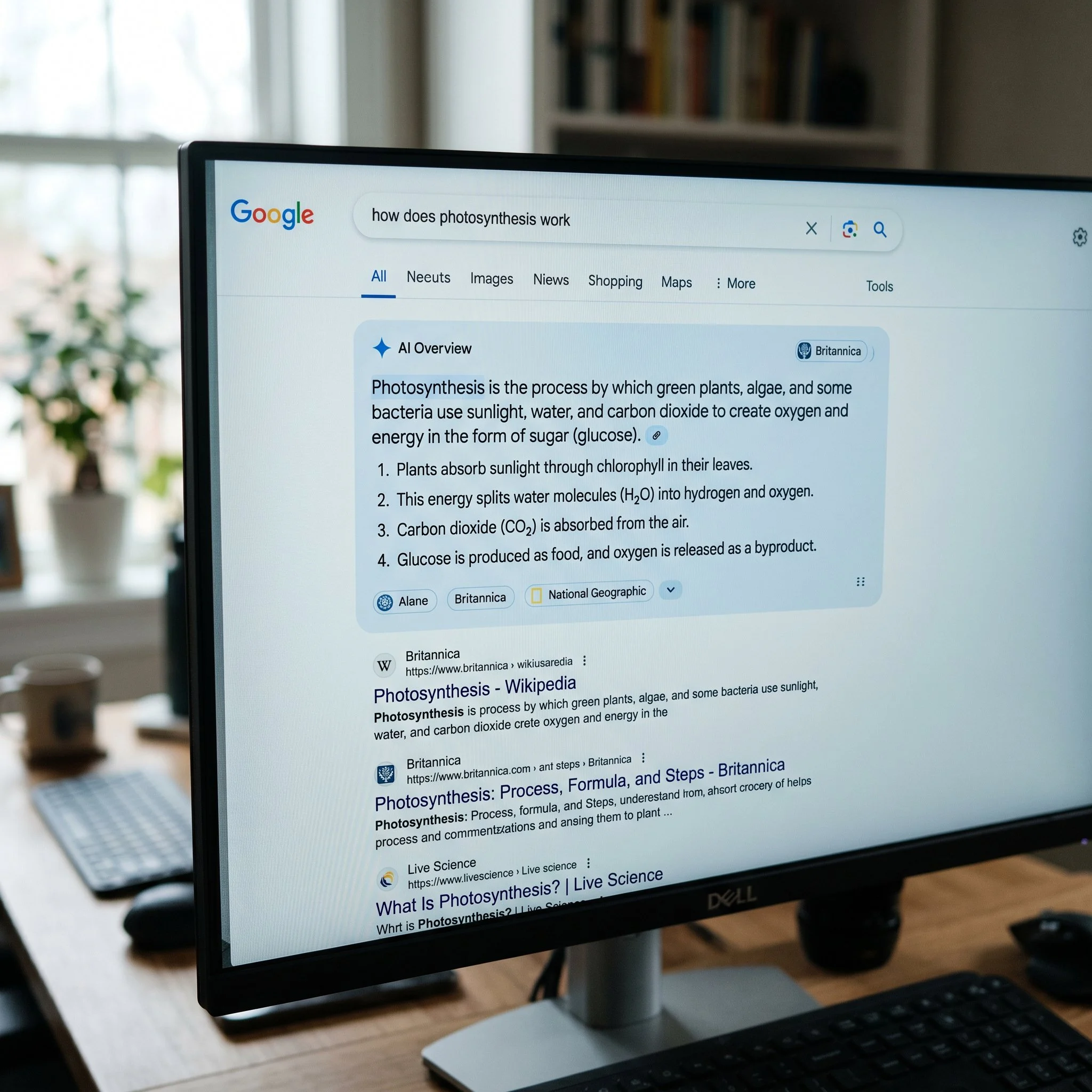
Even if your rankings have not moved, your clicks might still be falling. That is because Google is increasingly answering queries directly on the results page before anyone clicks anywhere.
Google’s own public position is that links included in AI Overviews actually receive more clicks than if that page appeared as a traditional listing for the same query. Google also says those clicks are “higher quality,” meaning users spend more time on site. That sounds reassuring.
The problem is that independent research tells a very different story.
Ahrefs’ study of 300,000 keywords using aggregated Search Console data found a 34.5% lower average CTR for the top-ranking page when an AI Overview was present. By December 2025, a follow-up study using the same dataset found the impact had worsened to around 58% lower CTR for position-one pages.
Seer Interactive’s analysis found that organic CTR on queries with AI Overviews fell from 1.76% in June 2024 to 0.61% by September 2025, a 61% decline. Seer also found that being cited inside an AI Overview materially improved performance, with 35% higher organic CTR compared to similar queries where the brand was not cited.
Amsive’s research added useful segmentation: the CTR decline averaged 15.49% overall, jumped to 19.98% for non-branded queries, 27.04% for keywords outside the top three, and 37.04% where AI Overviews and Featured Snippets appeared together on the same SERP.
That last figure is a strong signal. A lot of the damage is not just from AI Overviews in isolation. It is from page layout compression, where multiple SERP features are stacking above organic results and physically pushing them further down the page.
SISTRIX’s analysis of the German market puts a concrete number on the scale of the problem. It found that where AI Overviews appear, CTR at position 1 falls from 27% to 11%, costing an estimated 265 million organic clicks per month in that market alone.
One important caveat worth stating plainly: Google does not give you a separate AI Overviews report in Search Console. Those interactions are folded into standard Web search data. So any attempt to quantify your AI-specific click loss depends on indirect analysis against your own query data, not a clean first-party report.
Why Featured Snippets, Knowledge Panels, and Answer Boxes Matter Again
AI Overviews are the newest version of a problem that has been building for years. They are not a sudden departure from how Google has been heading.
Google introduced Featured Snippets to surface a direct answer box above standard results. Knowledge Panels were built to provide facts directly in Search. People Also Ask expands to answer follow-up questions before a user even considers clicking. Each of these features was purpose-built to resolve a query without requiring a click.
Ahrefs explicitly describes AI Overviews as the newest in a long line of Google features designed to answer questions without a click. The direction of travel has been consistent for years. AI Overviews have just accelerated it.
Search Engine Land modelled this problem before AI Overviews even launched publicly. In a study of 23 websites in technology-focused informational queries, it projected aggregate organic traffic drops of 18% to 64% under Search Generative Experience conditions. That suggests the click-compression problem started building during the SGE phase in 2023 and 2024, not just since AI Overviews were rebranded and rolled out.
The practical implication: if your site primarily targets informational queries that can be answered in a paragraph, you now need to think carefully about whether ranking well is still enough on its own.
How to Tell a Ranking Problem from a CTR Problem
This is one of the most valuable diagnostic distinctions in modern SEO, and most people skip it.
Google’s own traffic drop debugging guide lists algorithmic updates, seasonality, technical issues, changing interests, and reporting glitches as distinct causes. It tells site owners to look at Search Console patterns before making any changes. That is still the right starting point.
Here is a simple decision tree based on what the data actually shows:
If impressions and average positions both fall alongside a confirmed update window, you have a ranking problem. Start with quality, relevance, and authority diagnosis before anything else.
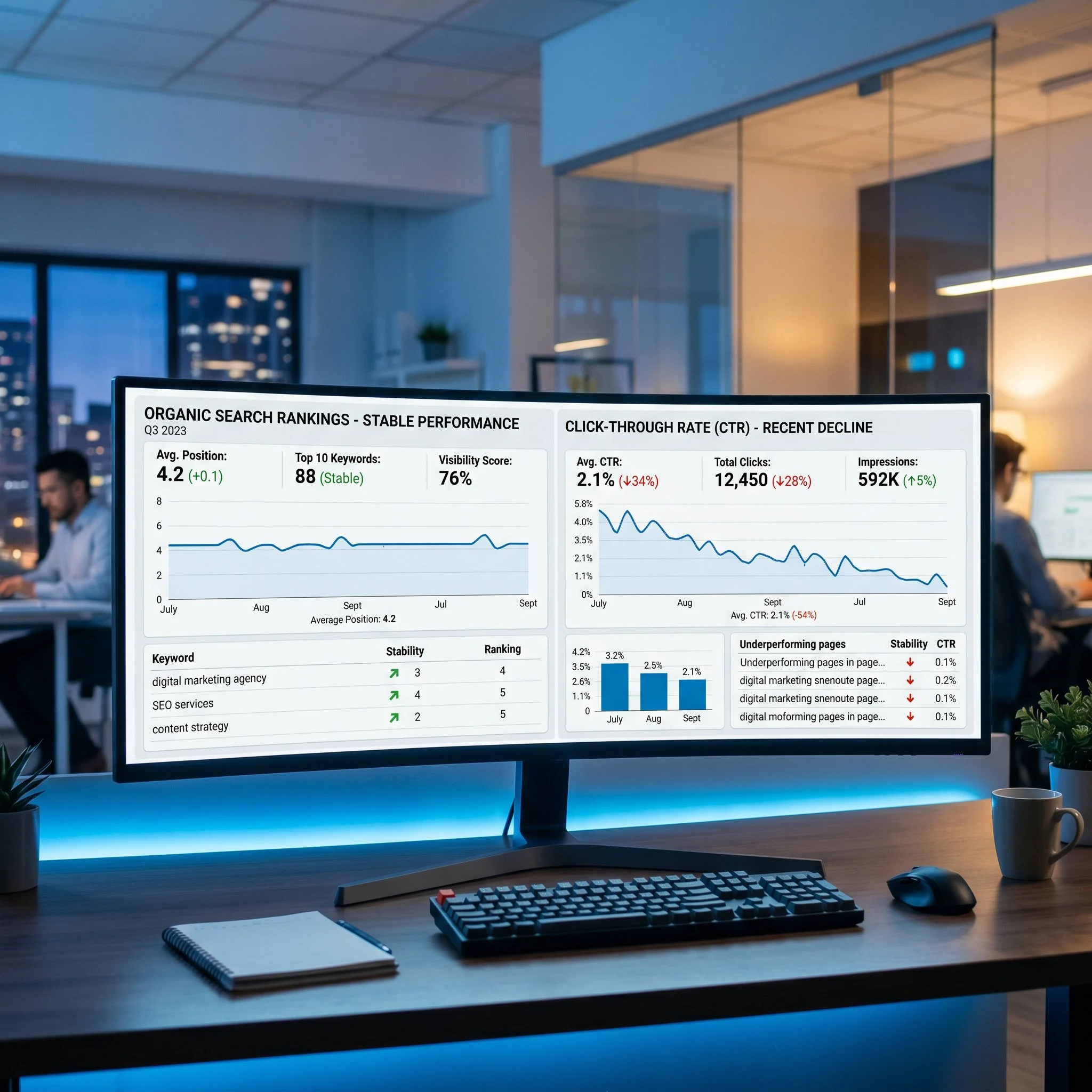
If positions are broadly stable but clicks and CTR are falling, especially on informational queries, you likely have a CTR compression problem. The SERP layout is working against you, not your ranking. Test your title tags, snippet copy, and the opening paragraph of those pages.
If Search Console looks steady but Google Analytics shows a sessions drop, do not touch your SEO. Start with your tracking setup. Check for consent mode issues, tag changes, or GA4 configuration problems. The site may be fine. The measurement may be broken.
A useful second cut is to split branded versus non-branded queries in Search Console. All of the major independent studies, including Ahrefs, Seer, and Amsive, show that the CTR hit from AI Overviews is significantly larger on non-branded, informational queries than on branded or navigational ones. If your branded traffic is fine but your informational traffic is down, you are almost certainly looking at CTR compression rather than a ranking penalty.
The Technical Failures That Still Get Mistaken for Algorithm Hits
Not every drop is a content quality issue or an AI Overview problem. A meaningful number of “algorithm hits” are actually technical failures that happen to coincide with update windows.
JavaScript rendering is one of the most common culprits. Google processes JavaScript through a separate crawling, rendering, and indexing pipeline. If a recent site deploy introduced a rendering issue, key content blocks may have quietly disappeared from Google’s index without anyone noticing until a traffic drop showed up in a dashboard. Use URL Inspection in Search Console and check the rendered HTML, not just the raw source.
Mobile-first indexing is another one that catches people out. Google indexes and ranks from the mobile version of your pages. If your mobile HTML is missing structured data, key content, or metadata that your desktop version has, you are being indexed from an inferior version of your site. Check mobile parity carefully.
Core Web Vitals can compound existing content or relevance issues, though Google is careful not to describe them as a silver bullet. Poor page experience on slow or unstable templates is worth reviewing, but it rarely explains a sudden drop on its own.
Seasonality is consistently underdiagnosed. Google explicitly lists seasonality and changing interests as common explanations for traffic declines. Before you blame an update, pull your prior-year data in Google Trends and compare the shapes. A drop that looks alarming in isolation often looks entirely normal when placed next to the same period twelve months earlier.
Tracking and measurement glitches deserve more attention than they get. If your GA4 sessions drop but your Search Console clicks hold steady, something has broken in your measurement, not your rankings. Consent mode changes, tag manager updates, and template changes can all silently break tracking without setting off obvious alerts.
What Site Owners Should Test Before Rewriting Everything
Google’s official guidance on appearing in AI features is actually quite straightforward. There are no special schema types required. No extra requirements beyond normal indexing. A page simply needs to be indexed, eligible for a standard Search snippet, and built on solid SEO fundamentals.
Google’s newer AI optimisation guide makes it even clearer: the answer is still SEO, specifically unique, valuable, non-commodity content alongside clean technical foundations.
That means the mitigation strategy is not “pivot to GEO” or tear up your content plan. It is to make your pages more selectable, more citable, and more worth clicking in an environment that increasingly offers answers before it offers clicks.
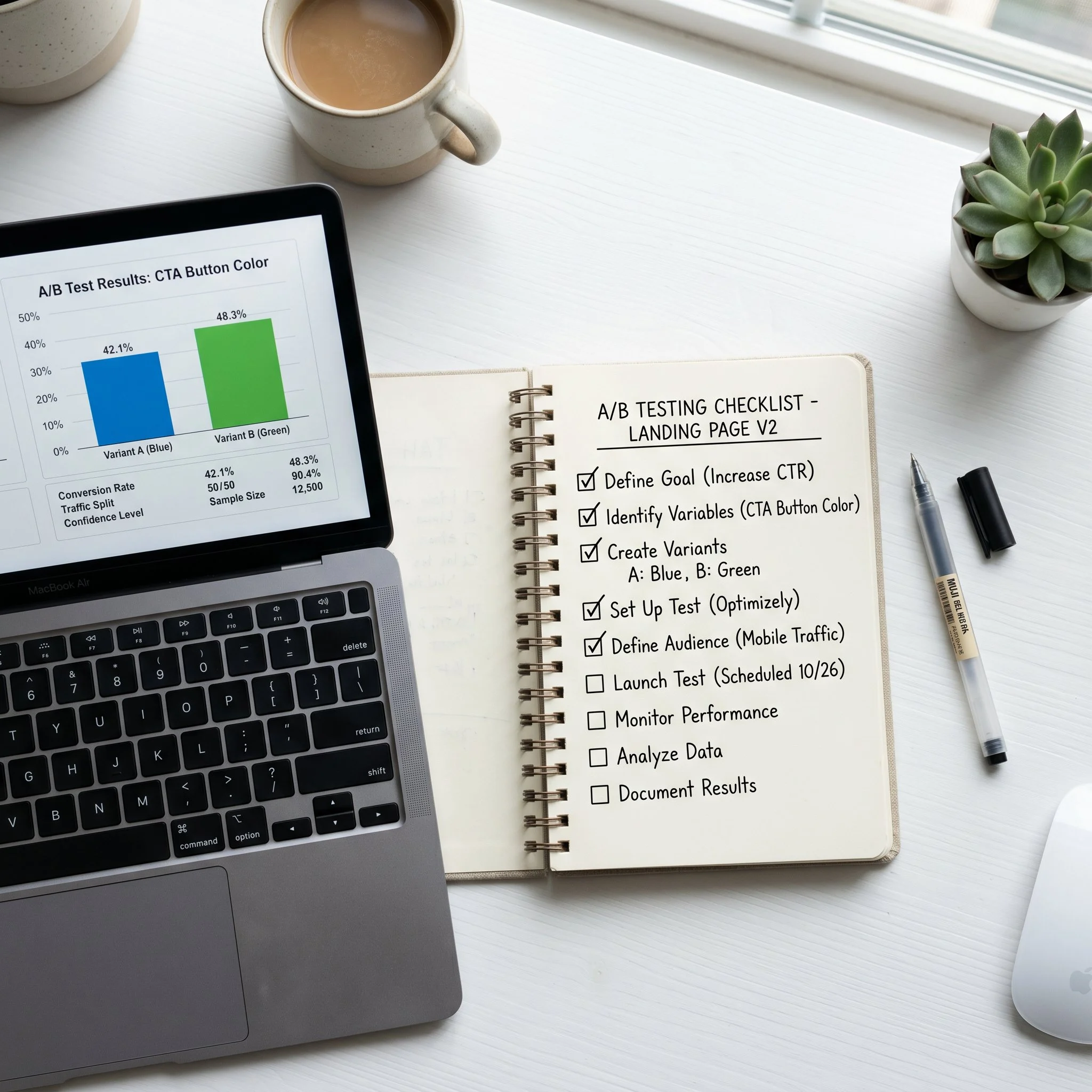
Before you rewrite everything, run a proper controlled test. Here is a practical framework:
Pick one section of the site, define a clear baseline using Search Console data from at least 8 weeks, and isolate a test group of pages with a holdout group. Make changes to the test group only, and wait for at least four weeks outside of any confirmed update windows before reading results.
Prioritise pages that show stable impressions with falling CTR, since these are the clearest candidates for CTR compression. A page holding position 2 but losing clicks has a different problem to a page that has fallen from position 2 to position 8.
A strong set of changes to test together includes: a rewritten title and opening paragraph; a concise direct-answer block near the top of the page; clearer H2 structure; at least one piece of proprietary data, original example, or first-hand experience; refreshed publication and review dates; and tighter internal links from your most authoritative pages.
What you should not do is mass-expand your topic cluster into hundreds of near-duplicate query variants. Google’s AI optimisation guide explicitly flags that creating separate pages for fan-out query variations primarily to manipulate rankings is a violation of the scaled content abuse policy.
Bing also deserves more attention than most UK site owners give it. Bing launched AI Performance in Bing Webmaster Tools in February 2026, which shows how often your site is cited across Copilot, AI-generated summaries, and partner integrations. If your Bing traffic is also suffering, visibility diversification is now a legitimate part of your SEO risk management.
The Metrics That Matter Now That Raw Traffic Is Less Reliable
Organic sessions as a headline number is becoming increasingly difficult to interpret.
If Google is right that clicks from AI Overviews are higher quality (i.e. users spend more time on site and are more likely to convert), then a drop in raw traffic might not represent a proportional drop in actual value. If the independent studies are right and click compression is broad and real, then raw traffic understates the scale of the problem.
Either way, raw traffic alone is not enough. Track alongside it:
Conversions and assisted conversions. If organic traffic is down 20% but conversions from organic are only down 5%, your remaining traffic is doing more work per visit. That is meaningful context.
Engaged sessions and session quality. Bounce rate is dead in GA4, but engaged sessions (30+ seconds, multiple page views, or a conversion event) give you a proxy for visit quality.
Branded vs non-branded split. Watch these separately. A healthy brand signal while informational traffic drops is a very different picture to both declining together.
Search Console query data. Filter by page type, query intent, and branded versus non-branded. The CTR view at query level will tell you more than the site-level clicks chart.
Citation visibility on Bing. If you are serious about AI search visibility, start checking Bing Webmaster Tools’ AI Performance data now. It is one of the only first-party AI citation reports currently available to site owners.
The broader point is this: search has changed structurally, not just cyclically. More queries are being answered before anyone clicks. More updates are running at pace. More of the SERP is occupied by features that compete with organic listings.
That does not mean SEO is less valuable. It means the measurement framework needs to catch up with what is actually happening in search.
What to Do Right Now
Start here:
- Check the update timeline first. If your drop lands inside the May 2026 core update window (21 May onwards), assume market noise and wait for the rollout to settle before drawing conclusions.
- Open Search Console and separate ranking loss from CTR loss. Look at clicks, impressions, average position, and CTR at both page level and query level. Split branded from non-branded. The pattern will tell you what kind of problem you are dealing with.
- Rule out technical blockers early. Run URL Inspection on the pages that dropped. Check rendered HTML. Verify mobile parity.
- Check your measurement. If Analytics shows a drop but Search Console looks stable, fix the tracking before touching the SEO.
- Improve what makes your pages citable and worth clicking. That means genuine first-hand experience, original data or examples, clear structure, direct answers near the top, and content that is specific rather than generic.
- Do not panic-rewrite everything. Google’s own guidance warns against sitewide reactive changes when the evidence is ambiguous. Small, controlled tests outside noisy update windows give you far better signal than a site-wide overhaul.
If you are unsure where the problem actually sits in your site, or you want a proper diagnostic before making changes, get in touch with the team at ClickPower. We work with businesses across the UK on exactly this kind of structured search analysis, and we know the difference between an update casualty, a CTR problem, and a technical fault.
The search environment in 2026 is genuinely more volatile and more AI-mediated than it was two years ago. But it is still diagnosable, and it is still fixable, if you approach it methodically.
How ClickPower is adapting
At ClickPower we are focusing on:
- Search Console CTR analysis
- Content designed for AI citations
- Stronger topical authority
- First hand experience content
- Conversion optimisation
- Brand building
- Bing AI visibility
- Monitoring AI Overview impact